Description
A powerful, deeply human collection from one of America’s most distinctive literary voices.
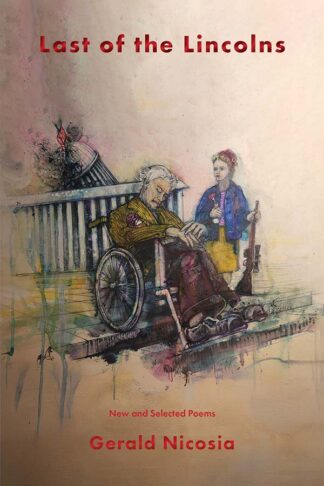
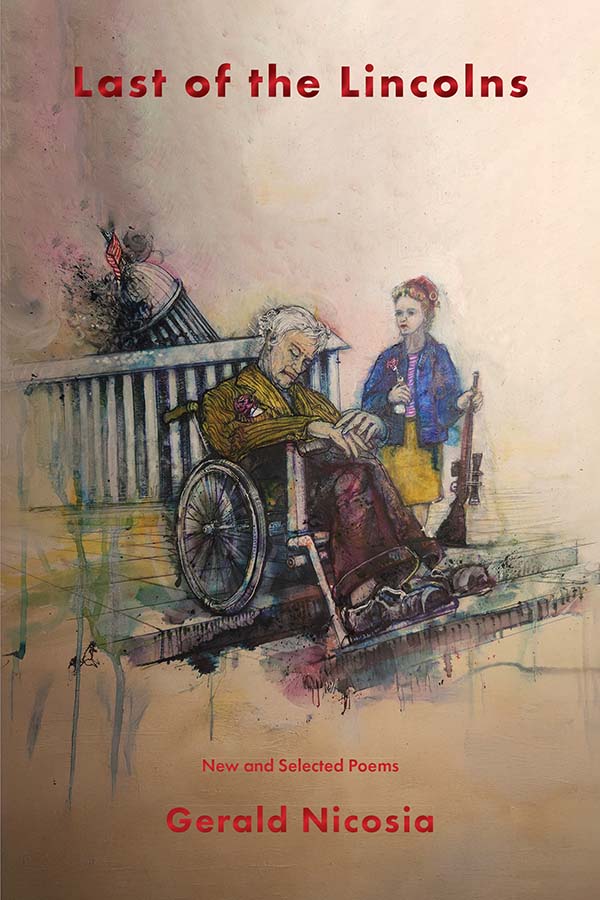
In Last of the Lincolns: New and Selected Poems, Gerald Nicosia—renowned biographer of Jack Kerouac—turns his sharp eye and generous heart fully to poetry. This sweeping collection gathers new work alongside selected poems that trace a lifetime of experience, memory, and reflection.
Moving effortlessly between elegy, tribute, haiku, and narrative verse, Nicosia writes with clarity and emotional honesty, inviting readers into a world shaped by love, loss, friendship, and the passage of time. From intimate portraits of family in “Wives, Mothers, and Daughters” to vivid encounters with literary legends in “Kerouac and Other Beat Heroes,” these poems honor both the personal and the cultural forces that define a life.
Here, the Beat Generation lives again—alongside mothers, daughters, lovers, and lost friends—each rendered with compassion and unflinching truth. Nicosia’s work bridges the spirit of American counterculture with a timeless search for meaning, capturing moments of beauty in everyday life and confronting mortality with courage and grace.
Whether reflecting on aging, memory, or the enduring power of human connection, Last of the Lincolns offers poetry that is accessible, moving, and profoundly resonant.
For readers of contemporary American poetry, Beat literature, and literary biography, this collection is both a tribute and a revelation.
Praise for the poetry of Gerald Nicosia
Gerry Nicosia has kept a faithful record of his wrestling matches with the Angel of Sadness. His style and sensibility remind me of Algren and Cendrars.
—Barry Gifford
Gerald Nicosia is a real poet, very much in the San Francisco tradition of Ferlinghetti, Patchen, Rexroth, and Ginsberg.
—Lionel Rolfe, Los Angeles literary critic, author of Literary L.A. and Fat Man on the Left
Gerald Nicosia’s poetry is like some of the new jazz in its many-sidedness and intelligence.
—Michael McClure, Beat poet
Gerald Nicosia is a poet of the first rank, following in the tradition of Irving Layton and Theodore Roethke.
—Jerry Kamstra, author of The Frisco Kid
Praise for Last of the Lincolns
I know characters whom Gerald Nicosia knows. I’ve been to places he has been. We’ve been alive during the same years. He writes truly. Poetry—that is, beauty and truth—comes to him whatever he beholds. And then there’s the new. He reveals to me wonders I had not known—the Lincolns, the last of the Lincolns.
—Maxine Hong Kingston, author of The Woman Warrior, China Men, and recipient of the National Medal of Arts
In Gerald Nicosia’s Last of the Lincolns, the energy of the famed cultural historian is concentrated into a dynamic poetry. Elegies, Neruda-like odes, tributes, haiku—here is writing that confronts, and counters, time’s relentless flow, not through the stillness of a frozen art, but by inventing a rushing street full of friends, lovers and saints all its own. Charlie Parker, Jack Kerouac, Bob Kaufman, Ntozake Shange reappear, not from the underworld, but in the glowing present of Nicosia’s poetic parade. Along the way, we hear tales from the poet’s personal history, and stop to observe moments of pure, cosmic beauty: “Under streetlamps / A sky filled with orange planets.” These are poetic encounters not to be missed.
—Jerome Sala, author of Spaz Attack and I Am Not a Juvenile Delinquent, and first heavyweight champion of Chicago’s famed poetry slams
The great biographer & poet Gerald Nicosia writes some of his best poetry in this important book of his generation.
—Charles Plymell, original Beat writer, author of 35 books of poetry and prose, including The Last of the Moccasins, Apocalypse Rose, Neon Poems, and Over the Stage of Kansas
Gerald Nicosia’s poetry never disappoints me. Each poem in Last of the Lincolns compels me to engage with it in ways sometimes unexpectedly poignant, and often deceptively enlightening. All together they comprise a thoughtful, artful, caring poet’s mosaic of a world both public and personal. Last of the Lincolns belongs on the “favorites” shelf of any poetry lover’s collection—it’s now on mine.
—Michael Lally, New York School poet, author of Rocky Dies Yellow, It’s Not Nostalgia, Another Way to Play, and dozens of other collections
Gerald Nicosia’s new book of poems moves along with the music of life, as he explores the world around him in slow, careful steps. Of particular interest to me was the section called “Wives, Mothers and Daughters”: rolling poems that get at the silent corners of our intimacy—touching, honest accounts of our just-below-the-surface feelings for those close to us.
—Joanna McClure, one of the original Beats, author of Catching Light: Collected Poems
Darkness and light, love, complete hopelessness, compassion for both the harshness and the glory of life, these are always the true poet’s material. Gerald Nicosia is such a poet—across the whole spectrum, both good and bad, of human existence. His words once read become permanent.
—Dale Herd, author of Wild Cherries and Dreamland Court
In Last of the Lincolns, Gerald Nicosia finds the heartfelt words of restoration for our dangerous, murderous times, privileging “Our loving thought / And careful remembrance / Of what has / Gone before.” In the poem to his late friend, poet Jack Mueller, he says, “I’m writing this poem because / it’s the only way I have / of reaching you now.” Nicosia’s elegiac poems directly address lost friends and fellow poets, and his deeply sorrowful yet celebratory eulogies create a moving ‘Lives of the Poets.’ a gallery of living portraits of Gregory Corso, Bob Kaufman, Eugene Ruggles, d.a. levy, Neeli Cherkovski, and others, capturing the essence of these inspired, flawed, difficult and gifted individuals. This New and Selected Poems also includes Nicosia’s testaments to the love of family and community, his poems catching the vivid details of the passing world before they vanish forever: “To be brought back into / The daily time of human life.” The ghost of Jack Kerouac still keeps Nicosia company on “life’s broken road,” the American Lincoln Brigade volunteers who fought fascism in the Spanish Civil War are honored for their courage and sacrifice, and marginalized histories are saved from erasure through personal, ethical validation. The values of a lost America are fiercely mourned in these poems, yet preserved against increasingly stacked odds: “spirit emerges bright and clean / From the cocoon / Of tattered, yellowing, discarded stuff / We call this world.” Can poetry bring back truth, restore our humanity? Miraculously, Nicosia’s profoundly moving poems show that it can.
—Ian MacFadyen, author of William S. Burroughs: Cut, Ira Cohen: Into the Mylar Chamber, and editor of Naked Lunch @ 50: Anniversary Essays
I commend Gerald Nicosia as a multi-decade soldier of righteousness campaigning for the proper treatment of members of the writer community. His poetry also carries on that righteousness and a demand for a better world for all humans.
—Ed Sanders, author of Tales of Beatnik Glory and Fug You
Gerald Nicosia’s love here, for his mother, daughter, Loves, and the Beats “will pass through you/and the dream of it / will stay” (as it has the whole culture). “Life’s broken hearts,” “the ghost of Kerouac,” Neeli Cherkovski’s “volcanic mind” and many other significant, volcanic poets haunt these poems. Fun! Gerald Nicosia is much missed here in North Beach, San Francisco.
—Sharon Doubiago, author of Hard Country, South America Mi Hija, Love on the Streets, and My Father’s Love
Again, Gerald Nicosia proves himself to be a poet who’s constantly been moving towards and around the center of things, and in so doing spread warmth and empathy, love and affection, things money cannot buy; and thus he’s ever been and still is a mind who has been there.
—Udo Breger, photographer, author of Road Stops: Stations of a Life Journey with Burroughs, Gysin and Many Others
Gerald Nicosia’s Last of the Lincolns: New and Selected Poems is filled with decency, kindness, and love. His poems ache with sorrow and anguish for the sorry state of humanity, the injustice and greed and venality that human beings are capable of, and his powerful and lifelong desire to help create a world where “The quiet thought / Of kindness / And the quiet, powerful will / Of love for every / Brother and sister / On the planet” are real and alive and always will be.
—W. D. Ehrhart, Thank You for Your Service: Collected Poems